.

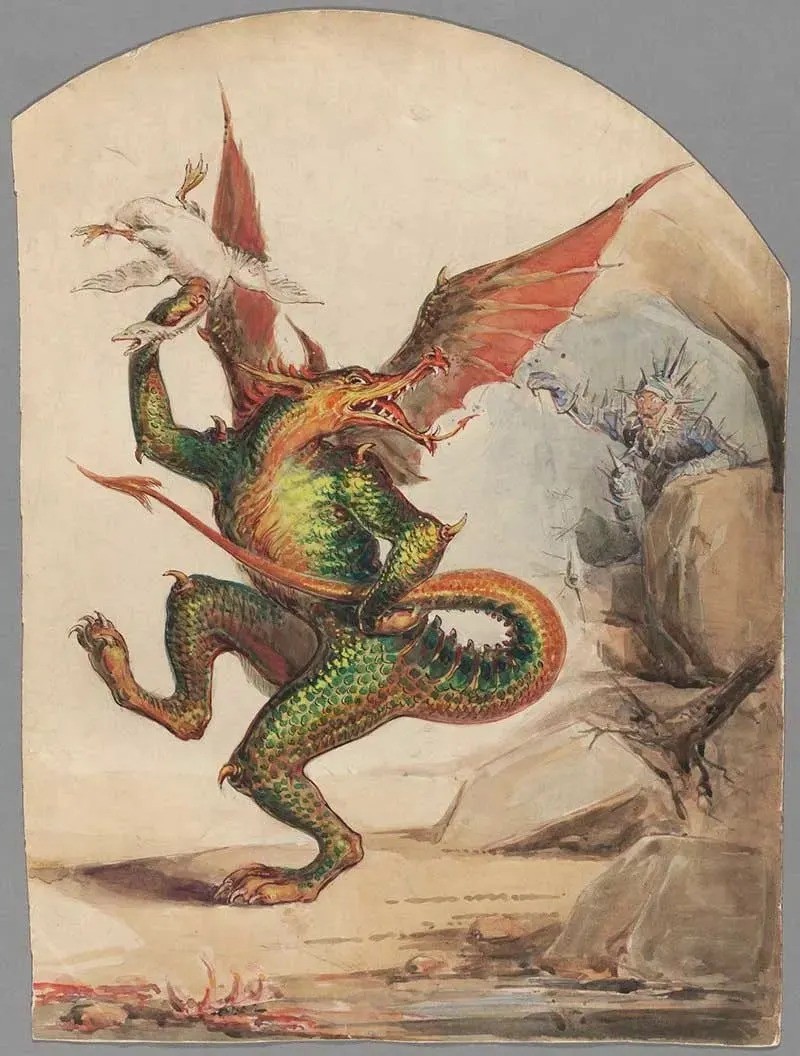
Picture it: a great dragon perched on a mountain of gold.
Except this one shops at Patagonia, listens to TED Talks, and has a financial advisor.
We call it the market, but really — it’s a hostage negotiation with better branding.
Here’s the real deal: A small number of people sit on the resources everyone else needs to survive, and in exchange for not letting us starve, they demand that we do their work for them. Sometimes we call that slavery, sometimes employment, and sometimes “the opportunity of a lifetime.” Depends on how polite you’re feeling that day.
This isn’t a glitch. It’s the code. The system works as it was designed to work. Colonial capitalism — feudalism in a three-piece suit — specializes in one maneuver: capture the commons, push everyone off the land, then rent life back to them at a markup. Food, shelter, health, time, belonging — all fenced, metered, and invoiced.
And because it’s impolite to say, “I can’t give you what you need because that would ruin my right to extract your labour,” we invented fairy tales: investment, profit, job creators, shareholder value. Incantations to make exploitation sound like civic virtue.
It’s a hell of a trick. Even the “good” ones believe it. The philanthropists, the conscious capitalists, the green investors — dragons with compostable scales. They mean well, bless them. But meaning well doesn’t change the math: the economy runs on withheld resources. Keep people hungry and lonely enough to get desperate, then call it productivity.
The Failure of Imagination
Here’s the part that chafes most: people still treat this as an accounting glitch.
“Maybe if we tax the dragons a bit more.”
“Maybe if we vote for the other dragons.”
“Maybe if we buy from the dragon who claims to care about the environment.”
No, friend. The foundation is cracked. You can’t reform a system designed to make dependency profitable.
Even the righteous revolts fall into the same trap. There’s growing talk of a general strike in the U.S. — a fine idea, truly — but what happens the day after the picket signs come down? We limp back to the same poisoned well and call it progress because the bucket is shinier.
A strike without a new foundation is just a slight delay before paying the rent. The dragons know they can just wait it out.
The Quiet Revolution
Meanwhile, something smaller and far more dangerous is taking root in the cracks.
A few stubborn fools — people like us — are testing another foundation altogether.
Call it a lifeboat, Game B, mutual aid, a bubble in capitalism. The name doesn’t matter. What matters is the material: cooperation instead of competition, reciprocity instead of rent.
We’re not chasing utopia. We’re just learning to keep what we grow and share what we have. We’re trying to remember how to feed one another without paperwork.
And make no mistake: that’s radical. Not the loud, flag-waving kind of radical — the quiet kind that grows back after every collapse. The kind that looks like a garden, or a tool shed, or a circle of people figuring out how to stay human together.
Because that’s the secret the dragons can’t afford for us to remember: the economy isn’t money, it’s relationships. The market didn’t invent exchange — it kidnapped it.
Every time we repair something instead of replacing it, every time we give instead of sell, every time we pool our effort to meet a shared need, we’re pulling another brick out of the old fortress and using it to build the next village over.
It doesn’t look like the kinds of revolutions they sell you in films. But the real ones never do.
A Closing Thought
We keep mistaking our stories for the world itself.
The economy, the market, the map —
all sketches we’ve drawn to keep from feeling lost.
Useful, maybe. But not true.
The soil doesn’t need our stories.
It just keeps turning waste into life,
quietly unmoved by our theories of supply and demand.
Maybe that’s the revolution right there —
remembering the map is ours,
but the territory was never ours to own.
Also read here: https://medium.com/@emotusoperandi/the-great-withholding-f397bfb65868 or here: https://emotus.substack.com/p/the-great-withholding