Lifeboats — the Backstory

I have made it my personal mission to launch a Fleet of 100 Lifeboats in response to the multiple global crises we now face. Recently, a friend asked where this idea came from.

As I was talking through a possible response with one of my collaborators, we realized it’s a challenging story to tell because it involves loops in space-time — the current idea is the result of a previous one that evolved from the one before that, etc. — so how many versions do you need to go back to get the full backstory? Somehow, no matter where you start it feels like you’re already jumping into the middle of the story.

So maybe we should start at the end and work backwards. Ultimately, through all these different iterations, we’ve become convinced that the multiple crises we face are the result of applying mechanistic / analytical thinking to a relational world. The problems are very deep, indeed, in the form of foundational beliefs.

How do you describe water to fish?

We noticed that despite the work of so many well-intentioned, motivated, and energized people, our social and environmental ecologies were and are falling apart; all the indicators are moving in the wrong direction. So, we started to ask ourselves why is that? What’s really going on here? Soon, it became clear, as Einstein said, “you can’t solve a problem on the same level that it was created.” We keep looking for superficial solutions to systemic problems, attempting to use the logic of the current system to heal the problems that very system has created.

So the real solutions require moving people from mechanistic/disconnected to integrated/relational ways of thinking and acting. But how do you invite people into a process that can’t be explained until after you’ve engaged it long enough to develop a new language to explain what you just experienced?

How do you tell the story of a solution that is simple yet complex, that has developed organically, iteratively, collaboratively, from the ground up, synthesizing and juxtaposing interdependent and often dynamically tensioned elements to an audience brought up on mechanistic, reductionist and radically individualistic thinking?

I haven’t the faintest idea. Not coherently. Not concisely.

But not knowing how to do something never stopped me from trying before.

Actually, I suppose that’s the main point. None of us know what we are doing! We face a challenge like none we’ve faced before — a challenge created by our taken-for-granted habits of thought and action. Therefore, relying on our taken-for-granted assumptions and reactions will likely make things worse, rather than better. That’s what’s been happening so far. Lots of folks with the best of intentions have been making things worse rather than better because our reductionist and disconnected ways of thinking keep leading us to make the same mistakes over and over then ignore the obvious consequences of our actions.

The situation forces us to face a basic epistemological question: How do we know if what we think we know is actually true? How do we know what’s really real?

My favourite answer comes from the American Pragmatists: something is true if it works. Of course, that leads us to ask “what does it mean for something to work?” William James uses the metaphor of an archer honing their skill as a model. The goal is straight forward — hit the center of the target with an arrow. The archer “knows” archery to the degree that they can hit the target reliably.

The Reflex Arc

James describes the learning process as a “reflex arc” — a process through which:

  1. we select the target,
  2. imagine the actions necessary to achieve success,
  3. take those actions in the real world, then
  4. reflect on the difference between expectations and experiences, and
  5. refine the actions we see as necessary to achieve success.

In this way, we learn and improve subsequent actions; things work better.

The archer moves from absolute beginner who is happy to simply hit the target through to a skilled archer who can begin to account for additional factors such as wind direction or variations in equipment to improve their accuracy by constantly using recent real-world feedback to refine mental models.

While it’s a useful metaphor, most actions in the world don’t have as clear a goal as archery, so we have to go further and apply the model to itself. This was Dewey’s contribution. We make “learning” the skill we aim to develop. We use the system to develop better tools for defining goals, imagining complicated actions and measuring results to allow us to refine our efforts around complex goals. In other words, we learn how to learn. This leads to a sort of meta-process at the core of the Lifeboat Project, an idea taken from Sociocracy 3.0 (S3.0) — treat all decisions as a series of experiments designed to maximize learning.

The basics of treating actions as experiments are simple. We short-hand it as “aim-act-reflect-repeat.” It’s an endless, self-motivating feedback loop in which each step in the cycle references the one before it and suggests the next. So, for example, as we take aim (again), we reference the lessons learned in reflecting on previous actions to clarify the aim itself, which suggests new actions necessary to achieve that aim, which inspires a natural curiosity to take those actions to see what happens.

This is actually easier to do in practice than it is to describe in theory. The reflection process is simply a matter of comparing what we expected would happen with what actually happened in order to refine our expectations and actions moving forward. In other words, the major learning comes from responding to what doesn’t work more than what does (though there’s still valuable information in what works consistently). It’s the gap between expectations and experiences that presents the best areas for learning. In S3.0, we define the gap between expectation and experience — between how things are and how they could / should be — as a “tension.” The gap that causes the tension draws our attention to the richest potential learning.

In the case of the Lifeboat Project, the core persistent tension is the gap between known, validated, patently obvious information about the urgency, severity, and risk of the climate crisis and the complete and utter lack of meaningful action on the part of the social institutions that are purportedly responsible for ensuring our well-being — government, “the market,” media, etc. Our expectation is that these social institutions are there for our protection, but the empirical reality is that the decision-making class are doing everything in their power to prevent solutions from happening while simultaneously working actively to make things worse (for us).

How do we shift our expectations, then, to come closer to match our experience and what are the implications when we do?

Social Transformation

All societies are, in effect, a sort of mass delusion. Society is a set of stories about “how the world works” that often allow amazing things to happen. But sometimes these delusions just don’t work — or rather, they work really well at some things, but cause more problems than they solve overall. They get weighed down by a debt of bad decisions. Healthy societies are malleable and adaptive. They contain feedback loops that allow their stories to transform as their environment shifts. They know the map is not the territory, recognize the negative consequences of choices and adapt accordingly.

Unfortunately, it seems that most (probably all) societies reach a point where they lose their adaptability. They become old, brittle, and fragile. When that happens, the society must re-invent itself to survive, but before that can happen, it must first fall apart.

Of course, societies ultimately exist inside the head — the belief system — of the members of that society. So when societies transform, it only occurs through a fractal process of individual transformation, which feels very much like an existential crisis — because that’s exactly what it is.

So, that’s where the “Lifeboat” idea comes from: a recognition that we need transformation at the person/place/community level. Transforming the world and our communities from an extractive, top-down, capitalist framework to one that is relational, reciprocal and materially-focused starts with our individual transformations, actions and relationship-building in the face of climate crisis and social breakdown. It starts with the individual choice to do things differently, and the more of us there are who make those choices together, the greater impact we have.

How do we re-focus our efforts to care for our spirits by growing deep happiness and resilient mental health; our place — the physical/material health of our local environment; and our hearts through meaningful relationships? We realized that none of these things were possible by trying to do it alone, therefore the health of our relationships and the community are crucial. The Lifeboat Project is all about finding ways to make it easier for people to reach out and connect with the people who are already in their world, to start talking about what’s really real. What really matters, when it comes right down to it?

Because we are coming right down to it.

To the lifeboats

Our current problems run deep. Our leaders, institutions, and basic assumptions about how the world is supposed to work are all failing us. The problem is so huge that our brains can’t grok what’s going on. The complexity. The scale. And the constant noise! Who can make sense of it all?

So, let’s talk in parables. Our brains are shit at understanding complicated things but brilliant at understanding metaphors.

Imagine we have booked a cruise on the SS Normalcy. Well, actually, our parents booked it for us. They bought it for us as a present. They thought we’d like it and we ended up going along with it because we didn’t want to be rude and make a fuss. They meant well, after all.

The SS Normalcy is an enormous cruise ship. It’s what’s know as an “Ideology” class ship — ships that are big because bigger is better. The competition to be the biggest has gone on for years, pushing the envelop on naval engineering. No one even understands how they’ve managed to do what they’ve done. To be honest, the things are so big it’s hard to see how they even float, but somehow they do it. Of course, for safety reasons, the “Ideology” ships can only sail in extremely calm waters. Even as they’ve been getting bigger and bigger, they’ve been sailing to fewer and fewer ports of call. And only in good weather.

The SS Normalcy is the biggest, most luxurious ship ever built in its class. Of course, a lot of the “luxury” is only veneer. The gold isn’t real. The mirrors create a false impression of abundance. And the buffet is more about quantity than quality. But it looks impressive on screen. When you actually experience it, it leaves you feeling a little nauseated and disoriented. But, still, it’s very impressive.

And to pay for all the glitz, the company skimped on structure. After all, passengers aren’t going to examine the rivets to make sure they are tight enough. How could they even know? Sure, the engineers warned management that the boat would leak, but what do engineers know anyhow?

On the early runs, the company discovered that, OK, there’s a bit of leakage, but upper management figured out that it was cheaper to install a bigger bilge pump than replace the rivets. At this point, upper management consisted of a former Soviet state agency that had been privatized and “sold” to some Russian oligarchs who had figured out a long time ago that you don’t get rich by providing good service; you get rich by controlling the rules of the game.

So, that’s what they did…. They installed bigger pumps. But then the vibration from the new pumps started to stress the rivets more and that caused more leaking than the pumps could handle.

So they installed bigger pumps.

This put even more pressure on the joints and the leaks grew, but by that time, they had poured so much effort into pumps that they didn’t want to lose all that investment. Pumps saved us before, they’ll save us again! The only thing that mattered were bigger pumps. Bigger pumps are the only option!

Soon, they were at the upper limit of pump technology, but by diverting all the money they would have spent on any other routine maintenance they were 90% confident that they could invent an even bigger pump that might be able to keep up with current leaks.

Flushed with new “pump” money, their PR departments figured out a brilliant stunt and made pumps the latest fad. They provided huge scholarships to kids willing to go for degrees in pump engineering and they paid for professorships and buildings and research centers dedicated to the advancement of pump technology. Much ado was made about the announcement of the next generation of pumps, with artists’ renderings of how beautiful the new pumps would be and how everything would be hunky-dory then. Soon. 10 years, tops.

It was the hottest topic. There was even a reality TV show about it.

Anyway, we didn’t know any of that when we got on board. We just thought we would try to enjoy this gift from our parents as best we could. After all, it would be nice to vegetate for a while. Do nothing. Just eat, drink, and be merry. Work was for chumps!

Things seemed fine for a while, even though the “fun” seemed a little forced and the endless food, booze and sun we’re leaving everyone feeling a bit worse for wear. Just a little while ago, though, we heard a lot of noise and felt a shudder. All the passengers looked around at each other, but no one wanted to make a fool of themselves or look panicky, so we waited. For something. An official announcement. Maybe a siren.

Something.

But there’s been only official silence. The staff have been running around with pasted on smiles, looking decidedly uncomfortable, and sticking mainly to small talk or the dinner specials. If you ask them if everything is OK, they give an enthusiastic “yes” but if you ask for any details, they get flustered, mumble something about needing to check on things in the kitchen, then rush off.

So, here we sit at the strangest dinner theater we’ve ever experienced; sat at tables with a bunch of strangers all wondering what the hell is going on. There has been a parade of strange incidents. Just for a second, there was the smell of smoke. At another point, there was a rumbling from below decks. And most upsetting of all, one time the captain ran into the dining hall and shouted at the top of his lungs “everything is completely fine. Absolutely nothing is wrong!” And then ran out again.

But before you could make sense of what had happened or start to talk to your neighbors about it, it was time for another show. Every 15 minutes, it seemed! Half-naked dancers or a hypnotist that embarrassed people in the audience or a lip-sync competition with laser light show. Loud. Garish. Tasteless, yet hard to ignore.

Just now, though, you can feel things listing. Things aren’t level anymore.

I closed the bar the other day, so it was just me and the bartender. The guy was a little drunk and depressed as hell. In a classic reversal, I provided the shoulder to cry on for the bartender. He told me that there’s a strict division on board. They have public space and “crew space.” And staff are similarly divided between so-called “public” staff and “functionals.” The crew that actually make the boat run — the ones who cook and clean, keep the engines running and load in the supplies — are mostly kept below decks and out of the way. The conditions there are horrible.

The staff that you interact with as a passenger are all performers, hired for their ability to play a role. The cruise ship is currently owned by a theme park company and their highest goal is to create a complete fantasy for you, the passenger.

As the president of the company famously said, “people are tired of reality. We are here to provide them with an alternative. The cruise may not last long, but while it lasts, we are committed to creating the perfect illusion, no matter the cost.”

Over the years, the company found that the people with the actual skills didn’t “look right” to the passengers. Focus groups discovered that passengers felt more comfortable with an actor who looked the part — even when they were told he was just an actor!

As a result, the company decided on a new “strategic initiative” to make the command staff more “optic-friendly.” Appearance and the ability to act like you know what you’re doing have been the main hiring criteria for years. Apparently, computers handle all the day-to-day operations and as long as everything is predictable, it runs smoother than with a person in control.

Those same focus groups also found that the appearance of safety systems made passengers uncomfortable and spoiled the illusion. So they scrapped any emergency systems that were publicly visible, but corporate spokespeople assured the press on numerous occasions that the behind the scenes systems are super; top-notch — but, of course, they can’t let you see them for security reasons. (The suggestion that it has anything to do with a financial analysis the company conducted that revealed that it was cheaper to pay damages to the families of victims of disasters than to try to prevent them is just more “fake news.”)

Funny, when you saw that interview with the president before your cruise, the part about creating the perfect illusion seemed like such an cool idea. How fun! To create a perfect illusion if only for a brief moment. And they were so open about it; telling you how they do it even as they are doing it.

Unfortunately, it isn’t a perfect illusion. Even though the crew aren’t allowed to mingle with the passengers, you still have those chance encounters: closing time at the bar; those little moments when you see backstage; when the door swings and you see the mess in the kitchen.

We can all tell that conditions below decks are horrible but you would never know it when you interact with the staff. The reason is simple; if they complain or fail to smile they are sacked on the spot. But you can still see it in their eyes. That’s why most of the passengers try so hard to avoid eye contact. There’s a truth there that makes us a bit uncomfortable.

But now things are starting to get surreal. The “below decks” staff have started sending messages — notes hidden under plates or tucked in the mirrors in the bathroom. They all say the same thing: “to the lifeboats.”

The “public” crew, even the captain, are in completely over their heads. That’s obvious. They weren’t hired to actually run a ship. They were hired to look like the kind of people who could run a ship. They know it, too, and you can see the panic sweat. Their eyes keep darting around looking for someone with a teleprompter to tell them what to say. But the teleprompter is connected to the corporate head office and all it says now is “so long, suckers.”

The ones who actually makes the engines run and pump out the bilge hold have been sleeping four to a bunk in the lowest deck. They are the ones who actually know how things work. And they are telling you to head to the lifeboats. Now.

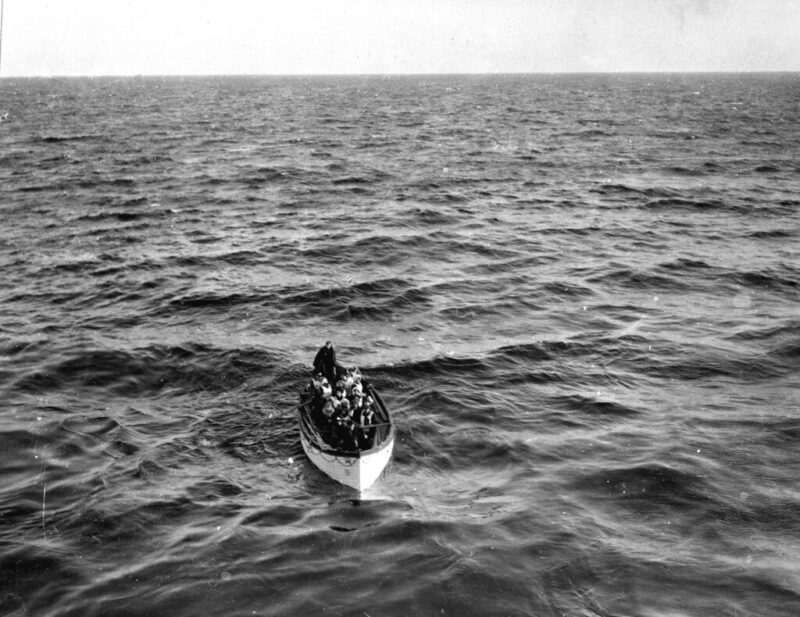
There is some good news. In an ironic twist of fate, trying to save money the cruise ship company salvaged a bunch of old life boats from the golden age of seafaring. These boats were built before the days of the lowest bidder. They were built by people who fully understood that one day, this boat may save their lives. They might look a bit shabby due to lack of attention over the years, but they are still rock solid and practically unsinkable.

Now is the time to make your way to the nearest lifeboat and prepare for launching. Proceed calmly, but quickly. Don’t panic, but don’t dally, either. Make sure your lifeboat is well provisioned. Take only the possessions that hold personal meaning or survival value. Remember that those old lifeboats require multiple people to make them work. Recruit fellow passengers who look like they are up to the task at hand.

Unfortunately, there will be no official alarm to tell you when to launch your lifeboat. The warning systems have all been dismantled to save money and the captain and his crew wouldn’t know how to work them even if they were still in place. You are best to set out as soon as you have a full lifeboat ready to go. Remember: the undertow that a large ship creates when it sinks can draw in small boats around it. Make sure you have launched in ample time and clear the undertow zone.

Convince as many fellow passengers to head for the lifeboats as you can, but don’t dawdle. Time is of the essence. Everyone is always surprised at how fast a big ship sinks.

Who knows? In the end, this might turn out to be a false alarm, but right now the SS Normalcy is dead in the water and leaning dangerously to the right. If they get things sorted out, I’m sure you’ll be able to return to the main ship. But frankly, I was getting sick of that floating circus. It seems to me like a fine time to set out on a different course and see what new lands we might discover.

Original source: https://medium.com/collaborative-action-network/to-the-lifeboats-6fe08434d9a9

The Apocaloptimists’ Tales #4: A message from Cassandra

I am the closest thing to a prophet you’re going to get and believe me no one here is excited by the prospects.

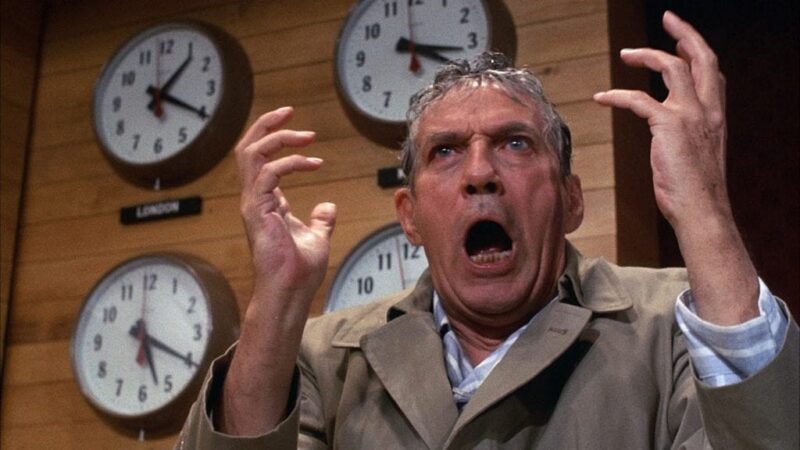
I know what you’re thinking. Matted hair. Crazy eyes. Looks more like a bum than a sage. Liable to go into a rant at the slightest provocation. And yes, at the moment, that’s a pretty accurate description. But what you don’t know is that none of us started off like that. We are crazy, sure, but because of the rest of you.

That, and the curse, of course. But that’s only part of the story.

You see a madman in front of you, but I wasn’t always like this. I have a history. I looked normal, once. Respectable. Admirable. An up-and-comer. I laughed at the idea of fate. Or evil. Work hard = get ahead. Make your own destiny! And evil? Never ascribe to malice what can more easily be explained by ignorance. Education! That was the key. The future was bright. Just around the corner… just one or two more steps.

Then Life revealed itself to me. Now, I know in my bones that my fate was sealed before my birth. A product of a particular place and time; the inevitable meeting of two genetic signatures. Poof. Me. Born. Assigned. Never asked. The next of Cassandra’s many children.

And evil? I have looked into the eyes of evil itself — the hollow stare of “just following orders” and “gotta pay the rent.” It’s hard to deny evil when you’ve seen its face and know its name.

I am told those early years and that mélange of tragedy and trauma — all those strange accidents of history — were conspiring to make the person you see before you, perfectly suited to this point in time. Perfectly conditioned to play the role I have as your personal prophet. You are reading these words because your destiny and mine are intertwined. I have been sent to you, specifically. In all of space-time and the universe, here we are together.

Never fear, though. You will walk away unscathed by this encounter. I, on the other hand, will be left just a little poorer. A little weaker. Like Tinkerbell when no one believes.

But that is my curse to bear, not yours. I can tell you yours, of course. That’s pretty much the only job requirement I have as prophet. I see your future as vividly as you see your face in the mirror. I can’t not see it, though I have tried. So, I warn you again and again, but to no avail. Somehow, you can’t see the reality that is staring back at you — so overcome by your addiction to comfort and privilege that you can’t fathom it. I call out “Look out! Stop!” but the words evaporate before they reach your ears, dissolving into the ravings of a lunatic. Obviously talking about someone else. Clearly unbalanced. Clearly disturbed.

And there again, you are correct. I am unbalanced and disturbed. Your denial of reality is so complete that it erases part of me. Your crazy is so powerful, it draws me in. It’s all I can do to stay here in reality, desperately resisting the siren song of your collective delusion.

But none of that changes your fate.

Still, sometimes I think I would swap yours for mine if I could. You at least, have the luxury of feigned ignorance. You can still pretend it’s all so confusing. Bad things shouldn’t happen to people like you. You are innocence personified — all the best intentions. (Best not to think about actions, though.) Just hold tight. Of course, the system will figure it out in the end! Hold the company line and maybe you can cash out before the bills come due. Screw the kids! Screw the future! No one ever cared about you; why should you care about them? Just because the world’s on fire? What’s that to do with you? Your too old or fill-in-the-blank to change. All your life, other people have taken the heat for your bad choices. Why should that stop now?

Oh, how I long for that sort of brazen hubris! What it must feel like to be immortal, unimpeachable — the keeper of all that is true and good! God’s literal gift.

Alas, that’s not how fate works. I couldn’t switch even if given the chance. I couldn’t be you for a minute. I don’t have the hutzpah. Or the imagination. How you find the energy to maintain the fantasy is beyond me! Truly, a testament to doing a little work developing that denial muscle every day. It’s quite impressive in a twisted sort of way.

Mind you, the truth isn’t all it’s cracked up to be. Like Gloria Steinem says “the truth may set you free, but first it will piss you off.” The truth is messy. Untidy. It is definitely not “all good” nor is it “all love.” The real truth doesn’t fit in neat lines of black and white, convenient lists of “always good” and “always bad.” It pulses and moves like a heart beat or a wild animal. Always dynamic and yet also timeless.

But for all that, the truth is simple. We confuse the Truth that can be known with the truth that can be described. It’s all metaphor and all metaphors are true, partly. The tao that can be named is not the true Tao.

But words are still important, so here is the truth: If you don’t pull your weight, someone else has to do more. If you eat more than your share, someone will go hungry at the end of winter. If you take more than can be given, the well will run dry.

These truths do not change because you don’t believe in them, though I know you do not. You cannot see how such simple truths have anything to do with your oh-so-complicated and oh-so-modern and important life. That is what will seal your fate. And, sadly, mine too.

This is why we, all Cassandra’s children, look crazed to you. We have been gifted with perfect prophecy and cursed with an inability to communicate it to the rest of you. We shout, sing, contort, innovate, create, cajole, plead, and pray a truth that is simple and plain to see:

Repent. The end is nigh. The only message of the prophet.

You are in danger and you have the power to save yourself. Why don’t you save yourself?!? You sit there, mesmerized by the flickering screen in the middle of a burning house. But there is nothing we can do to penetrate that thick cone of privilege and denial, wrapped in your warm cloak of comfort and belief.

Luckily, I know it’s not just me. I am legion, though we are all alone. In fact, I suspect if you’ve made it this far, you too are one of Cassandra’s children. Those unable to hear our message have already checked out, clucking their tongue at the tone or turned off by the type of font. But you know my frustration — seeing what seems so clear and plain and yet not being able to get someone you love and care about, someone who’s actions are causing the very pain they complain about, to make the connection.

So, brothers and sisters, let’s be clever, you and I. Let’s avoid the fate our matriarch endured by heeding the message she left us. With her last will, she left a testament for us — a gift to all her many children. We know the truth. Not the hype and Hollywood version. We hear the whimper while all around us, people wait for the bang, transfixed.

There is no magic incantation that will turn the deluded into believers — not that can be chanted alone. We cannot prevent what is to come nor can we alter the grand trajectory, but that doesn’t mean we can’t shape our little corner of it. Our gift is ours to share for the deserving. Cast not your pearls before swine. Conserve your energy for the struggle that is beginning and turn towards your siblings for support.

The time has come to band together, those of us who can see the writing on the wall. Reality always wins and we are on the side of Reality. Let’s stop wasting our precious time trying to connect with the disconnected. Instead, let’s work together to find ways of increasing our resilience in the face of what we all see coming our way. Eventually, I know we can create a space in our hearts and communities to accept those newly disillusioned when eventually reality forces itself on them, too, but first let’s secure our own oxygen masks.

The simple truth is that this culture, the one that led to climate collapse and the authoritarian impulse, can not endure. And the shape of the culture to come is already emerging. We all sense its vague outlines, though I doubt any could describe a single detail in any accuracy. So, this is a call to all my kindred spirits, all the Children of Cassandra, those allies of Reality — let’s come together to manifest — to make real with our hands — the culture that we know comes next.

You’re gonna feel this.

I’m seeing a lot of bruised and battered, dazed and confused folk wandering around out there, so I’m hoping this might provide a bit of relief for some of you.

If my circle of friends or my own personal experience is any indication, a lot of us are starting to question our mental health lately. It feels like things are happening at every level all at once. It’s hard to differentiate my feelings about what Putin is doing in Ukraine, from the same impotent rage at what my rich, entitled neighbours are doing right in my back yard. Everywhere you look, the bullies seem to be gaining ground while our “leaders” double down on the same losing strategies and the masses stand transfixed like deer caught in the headlights.

It’s hitting us hard and deep. The political suddenly feels very personal and all of it seems to trigger every old, unhealed wound we’ve suffered, echoing the unhealed wounds of our ancestors. Everything feels unsafe and we wonder what is wrong with us — especially when it seems like some people are just stumbling along oblivious to the shit-show that is going on all around them. The world is on fire and some people are running around pouring gas on everything, forgodsake! Are they crazy or am I?

I’m a social psychologist. To me, societies have their own psychological lives that play out through the lives of the individuals who compose the society. Our emotional lives are fundamentally connected to the emotional drama that is playing out around us at the cultural or societal level. We hum with a sort of emotional resonance. So, if society goes crazy, you’re gonna feel it.

Of course, our society hasn’t gone crazy. No, really. It’s actually healing from insanity. It is nature’s way of reasserting reality after a long, fevered delusion. Unfortunately, it’s crazy-making to live through. Here’s why:

Society is, in fact, a useful lie. It’s a way of organizing complex systems in overly simplistic ways to allow our feeble human brains to get a handle on things. It’s all metaphor. It’s a map and there’s nothing wrong with that. Sure, the map isn’t the territory, but maps are still useful.

The problem happens when the society forgets that it’s just a map, not the territory itself. And this seems to happen in every society that has ever risen, in a depressingly predictable cycle. We seem to consistently suffer a sort of collective amnesia: we start to believe our own lies.

When you start thinking that the map is more accurate than the landscape, you have a disaster waiting to happen. Eventually, this societal denial builds up a toxic load. The useful lies morph into dangerous delusions. Eventually, the society is no longer able to function effectively in its landscape. It ends up spending most of its energy just maintaining the delusion. This is what we are currently witnessing in Putin’s bombs, “freedumb” truck convoys, and the GOPs desperate attempts to shout down reality.

In the end, of course, reality always wins. Societies are living things and they are subject to the same evolutionary selection pressures as any other creature. When they no longer fit within their environment, there are two options: adapt or die.

This is where things get tricky, because societies have psychology in exactly the same way as you do — as an aggregation of very diverse parts. Society-out-there works exactly the same way you do “in there.” Not like our social conditioning that would have us believe that we have a single, coherent, consistent “personality.” That’s just one of those lies that has outlived its usefulness. In reality, like Walt Whitman says, we all contain messy, contradictory multitudes and that is our strength. Nature loves diversity. In nature, more diversity = more health. But it also means that things don’t simply switch from this to that. The world has never been binary. Adaptation is a process whereby one thing slowly transforms into the other as each of the component parts themselves transform.

But that doesn’t quite capture the feeling of the transformation. Transformation sounds so neutral. It feels like each and every element of the original form dies and only then is something new reborn. We all know the story of the caterpillar and butterfly — the classic image of transformation. But we don’t fully recognize what goes on in that cocoon. I cover it in more detail here, but TL;DR, even inside the cocoon, the immune system of the larva will try to attack the forming body of the butterfly-to-come — even as it is dissolving itself out of existence. There is a battle going on inside that cocoon — or at least that’s how the larva sees it. The larva thinks it’s fighting for its life.

A society only transforms when each of us transform, and that transformation happens at a molecular/neurological level. We all start out as part of the larva — identified with it — so in some sense we have to die to the larva before we can be reborn as the butterfly.

We love to talk about the “habitus” in sociology. Dozens of books have been written to explain the nuance of the concept, but the short form is habitus is to humans what water is to fish. It’s the environment that so surrounds us that we can’t even perceive it. Maybe it would be better to say, it’s like the Kool-Aid to fish; we drink it without even realizing it. We are born into and stew in that Kool-Aid all throughout our formative years. It shapes our core ideas about how the world “really” works, who we are, and how we fit into things. It goes beyond questions of good and bad; the habitus defines what is real and what isn’t.

But of course, you can’t define what is or isn’t real. Society is simply rendering some of reality as “unthinkable.” If society is a map, it’s the part marked “here be dragons.” As an interesting side note, you can easily identify the artificiality of social “reality” by watching when its defenders attack something — usually a suggestion that we act with kindness or integrity — with “that’s not how the real world works.” In every case, the “reality” being referenced here describes an artificially developed social standard that requires the threat of violence to maintain. Reality itself never needs to be defended.

Therefore, for a society to change, that basic operating system— the habitus — needs to be reprogrammed. But that’s the software that tells you who you are and what is real and true. So, when a society such as ours faces an existential threat — when it finds that it no longer fits in its environment — it forces an existential crisis on each of its constituent members.

And that’s where we find ourselves. The society that we were born and enculturated into must transform to fit within the material limits of reality. At a practical level, we simply need to let go of the lies that no longer work — that don’t actually fit with our lived experience. At that level, transformation is neutral. But it’s not gonna feel like that, at least not to the larva-mind. It’s going to fight back and hard. It’s a losing fight, of course. No matter what, that larva will never emerge again from the cocoon. The only real question is whether the butterfly survives or not.

So, I have some good news and some bad news and then some more good news. You aren’t crazy; our society is — or actually it’s going through the crazy-feeling process of reconnecting with reality after a long period of collective delusion. In fact, it’s been so delusional for so long that the only way we can survive is through such a deep transformation that what emerges will feel as different as a larva is from a butterfly. Unfortunately, that transformation will feel like dying in a very real way — and it’s going to be hard the more invested you are in larva-mind. This is why we are seeing the worst behaviour coming from the top of the pyramid. These are probably the most deeply delusional people on the planet. That’s the bad news.

The good news on the far side is that as soon as you can dissolve the last of the larval goo from your habitus — when you can see how polluted our water has become and start to crave pure, clear water again — the butterfly is waiting to welcome you into the process of becoming what comes next.

We are living through extraordinary and challenging times. There is nothing wrong with your emotional programming or your inner compass. Let me repeat: there is nothing wrong with you! It’s not you; it’s the situation we find ourselves in. You are angry and afraid and exhausted and frustrated because we are living in a broken, delusional society. The problem is that we have all been abused and battered by a lie that has outlived its usefulness and the discomfort we are currently feeling is there to motivate us to purge the lies from our system.

It’s time for us all to do the hard work of reacquainting ourselves with reality. And here’s maybe the best news of all — reality is just fine. Actually, it’s more than just fine: reality is awesome. What is less than awesome is our inherited culture of lies, oppression, and cruelty, so good riddance to bad rubbish. Now we can all finally learn to discard the delusional “real world” that bullies have threatened us with since before we were born and discover what it means to find ourselves connected all along.

So, I encourage you all to start identifying with the butterfly. The time has come for us to band together to support each other to dissolve those last vestiges of larval thinking and commit our time, attention and energy to bringing together all the parts that compose the butterfly. The larva’s days are numbered, it’s true, but its immune system has still got a bit of kick to it. There is real danger in this transition and our greatest source of resilience lies in cooperation. It’s time for the smart money to start betting on the butterfly.