
Finding Flow in turbulent times
Jan 20, 2017

The world’s a mess. Democracy is in peril. The ice caps are melting. And the inmates have taken over the asylum.
Suddenly, more and more people are waking up to alarm bells and wondering what can I do; how can I help?
But that’s not an easy question to answer in times like these. There are so many problems to deal with and one problem is so tightly linked to another it feels like you can’t do anything until you can do everything. Do we focus on direct protection of the most vulnerable or work to address the systemic problems? Work locally or band together at the national level? And everything feels so urgent and desperate! Should we even bother with electoral politics? Can we hope to have an impact on the climate change crisis with a consumerist culture gone mad from marketing?
It’s so disorienting you start to think that letting it burn is the only real solution. It’s terrifying. It’s stressful. It’s depressing.
OK, let’s just start right there. Fearful, freaked out, depressed people are never helpful, without exception. Fear both literally and metaphorically reduces your vision, so you miss important information that’s right in front of you and you make bad choices. When stressed out people try to help, their erratic behaviour just makes things worse. Depressed people don’t have the energy left after dealing with the depression to help someone else.
If you really want to be helpful, you have to get your head on straight.
Before you can help anyone, you have to find your ground. You need to find the attitude that is the exact opposite of stressed out, fearful, overwhelmed, depressed, demoralized, immobilized, etc. etc. etc. To truly be helpful, you need to be relaxed, open, focused, responsive, and motivated. You need to find what Mihaly Csikszentmihalyi calls flow —moments of optimal experience, when you are fully engaged and hitting on all cylinders.
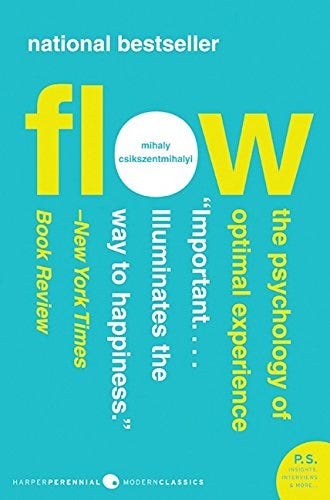
Csíkszentmihályi described flow as “being completely involved in an activity for its own sake. The ego falls away. Time flies. Every action, movement, and thought follows inevitably from the previous one, like playing jazz. Your whole being is involved, and you’re using your skills to the utmost.” He has also described flow as the key to happiness, because the more you are able to achieve flow, the happier and more contented you become; the more it feels like you are living a life well-lived.
This might seem self-indulgent; the house is on fire and I’m suggesting you find your happy place. Actually it’s quite the opposite because finding flow depends mostly on getting your self out of the way. Nearly everyone has had a flow moment — sometimes through our paid work, often when engaged in a favourite sport or hobby. They are those shimmering moments when everything just comes together, time-expands and contracts at the same time, and you feel focused, graceful, effective, unstoppable. It may have been a while, but we all know the feeling and the power behind it.
What most people don’t know is that you can actually develop your ability to find and maintain a flow state. Somehow, we’ve gotten the idea that those kinds of moments are rare and random — like a lightning strike. But luck always favours the well-prepared. While it’s true that you can’t will yourself into a flow state (more later), you can significantly increase the chances of it happening and your ability to keep it going.
In a way, it’s like learning to surf. You can’t change the waves, but you can increase your ability to read the waves and find the right one to ride. And once you get good at that and start riding more, you’ll start getting better at riding each wave longer. Eventually, naturally, you’ll start looking for bigger and better waves to ride.
We even know the flow factors — the practices and supports that will increase your chance of hitting and maintaining a flow experience. None of them are particularly difficult or surprising. But the real power comes when you combine these factors in a simple, mutually self-supporting process.
- Band together with a small group of friends. Draw from the best experiences you’ve had and explore your deepest values and hopes together. Then brainstorm ways you could live out those values in a concrete way in your life starting now. See if there are areas of overlap where you could offer each other support.
- Create a pilot project for yourself. Think of some concrete, realistic goals that you could accomplish in the next 3 months that help you live out your highest values. Pick something challenging, something that encourages you to stretch just a little bit past your comfort zone — it really doesn’t matter what as long as it calls to you. It’s only a pilot project; don’t worry about getting it perfect. Just pick some place to start.
- Schedule regular check-ins with your friends every week or two to provide both support and accountability. Have concrete milestones that help you know if you are on track (but be very forgiving is you fall behind… it’s only a pilot project after all!)
- After three or four months, use the real-world feedback you got in the first pilot project to design a second one for the next three months. Again, don’t worry about getting it perfect, just try to get it a little better.
That’s it. It really is that simple. Make a habit of this process and you will soon be experiencing flow moments more often and for longer periods of time. As a bonus, you will also naturally start honing in on what Frederick Buechner called “the place where your deep gladness and the world’s deep hunger meet” — a place where you maximize your positive impact; where you get the biggest return on effort, and can truly be most helpful.
Ah, but there’s a trick (there always is), because you can’t simply choose to enter a flow state. It’s more like how Douglas Adams describes the knack of flying: simply throw yourself at the ground and then miss. Flow (and by extension happiness) is what happens when you stop worrying about finding flow or happiness. Flow happens, as it were, when you throw yourself at work and miss; when work turns into something between a game and a meditation.
Flow is the natural byproduct of silencing our chattering monkey minds just long enough to fully engage in an activity for its own sake. It happens when we take action without any thought of our pride, or faults, hopes or fears, without, that is to say, all those stories we tell ourselves about who we think we are, and how the world is supposed to be. And flow is most likely to happen when you have put yourself in service to another.
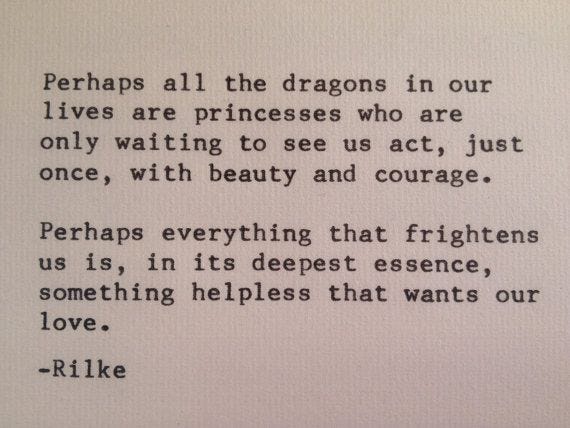
So, how can you help? The answer is simply to find the flow. Learn to set aside all the stories you tell yourself about how it’s supposed to be just long enough to engage the world directly through one small, meaningful action. Engage in it for it’s own sake, like an offering to the world. And by entering into a flow state, you get more experience with the silence beyond the chatter of all those identity claims of the ego and therefore it gets easier and easier to find flow again.
Just like learning to surf. And just like surfing, the first few times, you’re bound to have a wipe-out. Not a problem. Just shake it off and get ready for the next wave. And soon you will experience that one perfect ride that makes you hungry for more.
[Note: In part 2, we will be exploring the idea of an action kit that people could use with a group of friends, family, or neighbours to begin building a cooperative action cell. If you are interested in being part of a group to test an early version of the kit, click here to contact us.]